

Twrc newsroom- As blockchain technology continues to reshape global finance, major financial institutions are moving beyond cryptocurrency trading and investing in the infrastructure that could power the next generation of capital markets. Robinhood's introduction of Robinhood Chain is one of the latest examples of this evolution.
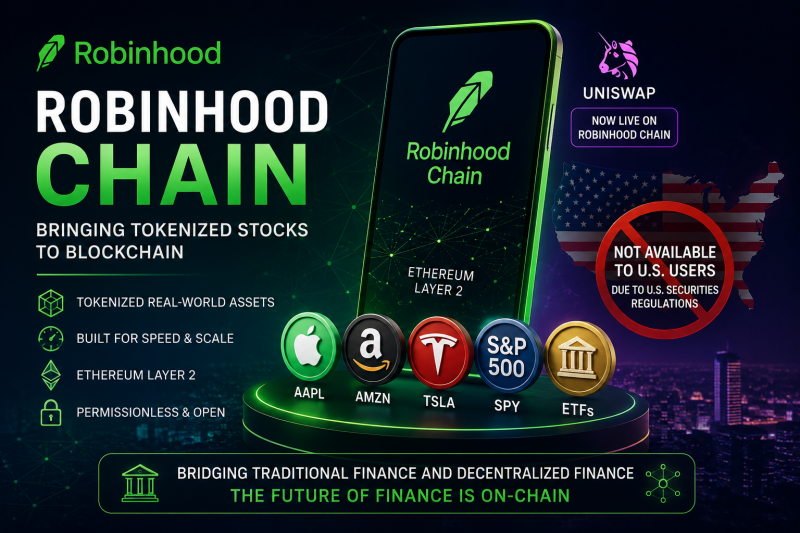
Rather than launching another blockchain focused solely on digital assets, Robinhood is building an Ethereum-compatible Layer 2 network designed to support tokenized real-world assets (RWAs), including stocks, exchange-traded funds (ETFs), and other financial instruments. The initiative reflects a broader trend toward integrating traditional finance (TradFi) with decentralized finance (DeFi).
For investors, developers, and blockchain enthusiasts, Robinhood Chain represents more than a new network—it demonstrates how regulated financial products may eventually operate within decentralized ecosystems.
What Is Robinhood Chain?
Robinhood Chain is an Ethereum Virtual Machine (EVM)-compatible Layer 2 blockchain that enables developers to build decentralized applications while supporting tokenized financial assets.
Key features include:
- Ethereum compatibility
- Smart contract functionality
- Permissionless blockchain infrastructure
- ETH-based transaction fees
- Support for tokenized real-world assets
- Integration with decentralized applications and wallets
Unlike traditional brokerage platforms, Robinhood Chain separates blockchain infrastructure from brokerage services, allowing developers to innovate while maintaining regulatory oversight for financial products
Understanding Tokenized Real-World Assets
Real-world asset (RWA) tokenization involves creating blockchain-based representations of traditional assets such as:
- Publicly traded stocks
- Exchange-traded funds (ETFs)
- Treasury securities
- Bonds
- Commodities
- Real estate
By placing these assets on blockchain networks, institutions hope to improve settlement speed, transparency, interoperability, and accessibility while enabling programmable financial services through smart contracts.
This rapidly growing sector has become one of the most significant areas of blockchain development.
Robinhood and the Future of On-Chain Finance
Robinhood Chain illustrates how traditional financial institutions are beginning to leverage decentralized infrastructure rather than compete against it.
Potential advantages include:
- Near-instant settlement
- 24/7 blockchain infrastructure
- Increased operational efficiency
- Enhanced transparency
- Improved interoperability between financial applications
- Expanded developer innovation
These capabilities could significantly modernize existing financial systems while maintaining regulatory compliance.
Uniswap Integration and Decentralized Accessibility
Robinhood Chain launched with support from Uniswap, allowing users to interact with the network through one of decentralized finance's most recognized protocols.
Through compatible wallets, users can:
- Swap supported assets
- Provide liquidity
- Access decentralized applications
- Participate in the Robinhood Chain ecosystem
This integration demonstrates how decentralized protocols can rapidly support emerging blockchain infrastructure.
Why U.S. Users Cannot Access Robinhood Stock Tokens Through Uniswap
One of the most misunderstood aspects of Robinhood Chain involves access to tokenized stocks.
Although Robinhood Chain is permissionless and Uniswap provides decentralized trading infrastructure, U.S. users generally cannot purchase Robinhood-issued Stock Tokens through Uniswap.
The reason is regulatory—not technical.
Robinhood states that its Stock Tokens are not registered under U.S. securities laws and are not offered, sold, or delivered within the United States or to U.S. persons. Similar restrictions apply in certain other jurisdictions.This distinction is critical.
Many investors assume that if an asset appears on a decentralized exchange, it is automatically available worldwide. In reality, decentralized infrastructure does not eliminate securities regulations governing regulated financial products.The blockchain may be open, but the assets issued on that blockchain remain subject to applicable laws.
Why This Matters for the Blockchain Industry
Robinhood Chain highlights a significant shift in blockchain adoption. The industry is moving beyond speculative cryptocurrencies toward infrastructure capable of supporting regulated financial markets.
As tokenization expands, investors should expect to see increasing participation from:
- Global financial institutions
- Asset managers
- Banks
- Brokerage firms
- Technology providers
- Blockchain developers
This convergence of traditional finance and decentralized technolog has the potential to redefine how financial assets are issued, traded, and managed.
Takeaway
1. Robinhood Chain is not simply another Layer 2 blockchain—it represents a strategic effort to bridge regulated finance with decentralized infrastructure.
2. For U.S. investors, however, it is essential to recognize that blockchain accessibility does not override securities laws. While anyone can interact with Robinhood Chain itself, access to specific tokenized securities remains governed by jurisdictional regulations.
3. Understanding this distinction is vital for anyone researching tokenized assets, decentralized finance, or the future of blockchain-based financial markets.
Add comment
Comments